Tenant fees: what a landlord can charge in England
The Tenant Fees Act 2019 bans every payment from a tenant that it doesn’t list. Since 1 May 2026, the Renters’ Rights Act has also limited rent paid before the tenancy.
Checked against the sources below on 21 October 2026. England only.
In short
- Anything not on the list of permitted payments is banned, including fees for references, inventories and admin.
- Deposit: at most 5 weeks’ rent, or 6 weeks’ if the annual rent is £50,000 or more.
- Holding deposit: at most 1 week’s rent.
- Late rent: only once it is 14 days late, and only interest at 3% above the Bank of England base rate.
- Changing the tenancy at the tenant’s request: £50, or your reasonable costs if higher.
- No rent can be taken before the tenancy is entered into for an assured tenancy.
The payments you can ask for
Schedule 1 of the Act lists the only payments a landlord or letting agent can require. A week’s rent is the annual rent divided by 52.
- Rent
- Not before the tenancy is entered into, and not higher in an early period of the first year than in a later one.
- Tenancy deposit
- 5 weeks’ rent, or 6 weeks’ if the annual rent is £50,000 or more.
- Holding deposit
- 1 week’s rent, to reserve the home before the tenancy is agreed.
- Late rent
- Interest at up to 3% above the Bank of England base rate, from 14 days after the due date, if the agreement says so.
- Lost keys or fobs
- Your reasonable costs, shown in writing, if the agreement says so.
- Changes to the tenancy
- At the tenant’s request: £50, or your reasonable costs if higher.
- Ending early
- At the tenant’s request: no more than the loss it causes you.
- Bills
- Council tax, utilities, TV licence, phone and internet, if the agreement says the tenant pays them.
Rent before the tenancy
Since 1 May 2026, rent for an assured tenancy can’t be payable before the tenancy is entered into. Once it has started, a tenant can choose to pay early, but you can’t require it.
Rent also can’t be front-loaded: if an earlier period in the first year costs more than a later one, the extra is a banned payment. Rent increases agreed later, or made under the tenancy’s own terms, don’t count.
If a banned payment is taken
Trading standards at the local council enforce the Act and can fine a landlord or agent who takes a banned payment. The tenant can also apply to the First-tier Tribunal to get the money back.
Deposits and rent checked as you go
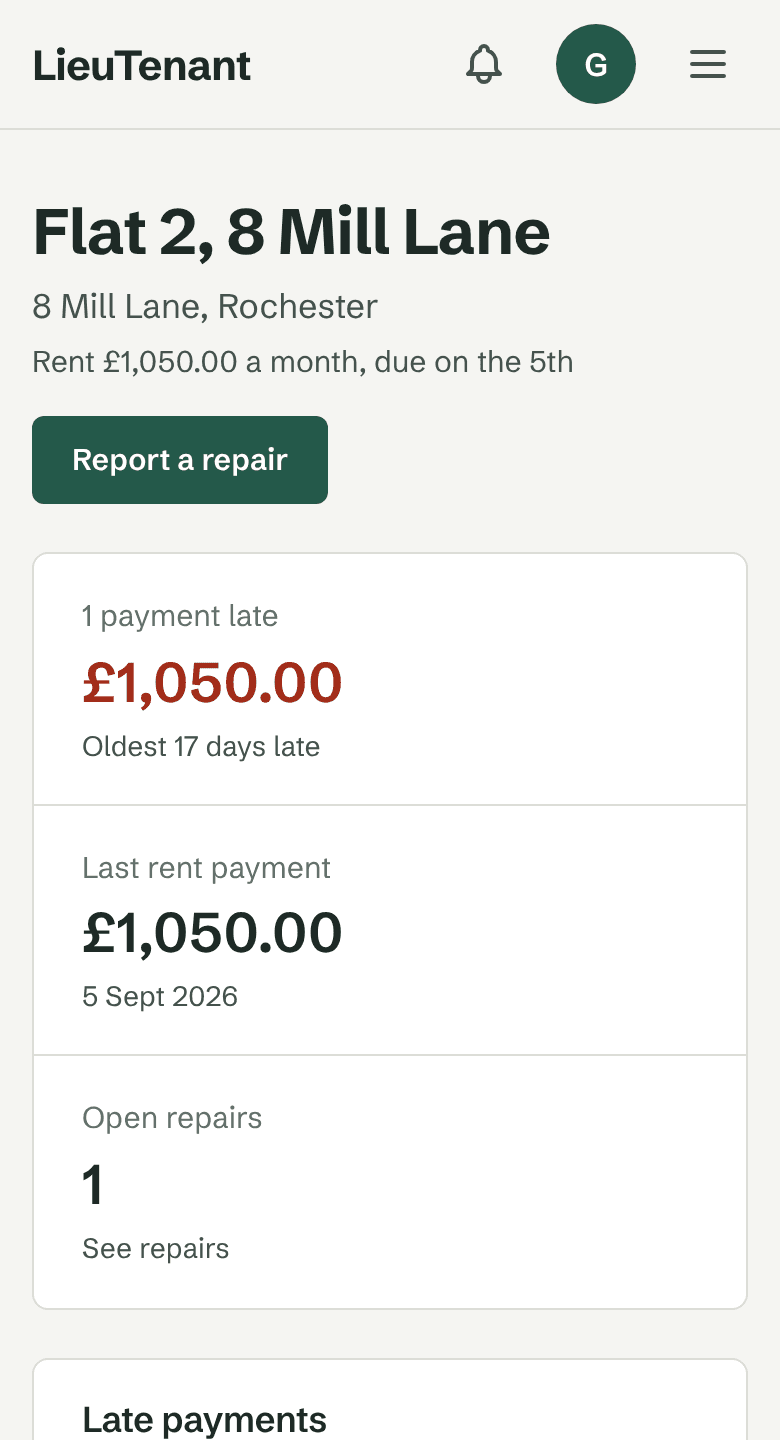
When you add a tenancy, LieuTenant checks the deposit against the 5 or 6 weeks’ limit and the rent asked for in advance, and records every payment against the tenancy.
Questions
Can I charge a tenant for a reference check?
No. Referencing, credit checks, inventories and admin fees are not permitted payments, so you can’t require them.
How much can a landlord charge for late rent?
Only interest at up to 3% above the Bank of England base rate, only once the rent is 14 days late, and only if the tenancy agreement allows it.
How big can a holding deposit be?
One week’s rent: the annual rent divided by 52.
Sources
- Tenant Fees Act 2019, schedule 1: permitted payments
- Fees you can charge as part of a tenancy (GOV.UK)
This guide is general information, not legal advice. Rules change; check the sources or a professional before acting.