Raising the rent: section 13 notices
Under the Renters’ Rights Act there is one way to put the rent up on an assured periodic tenancy: a section 13 notice.
Checked against the sources below on 21 October 2026. England only.
In short
- You can raise the rent once a year, to the market rate.
- Use a section 13 notice (Form 4A) and give at least 2 months’ notice.
- Rent review clauses in tenancy agreements no longer work.
- Tenants can challenge an increase at the First-tier Tribunal before it starts.
- The Tribunal can’t set a rent higher than you proposed, and the new rent isn’t backdated.
If the tenant challenges the increase
The tenant applies to the First-tier Tribunal before the new rent is due to start, and should tell you they are doing so. The Tribunal decides the market rent. It can’t go above your proposed figure, the new rent applies from its decision, and in cases of undue hardship it can delay the start by up to 2 more months.
Notices kept with the tenancy
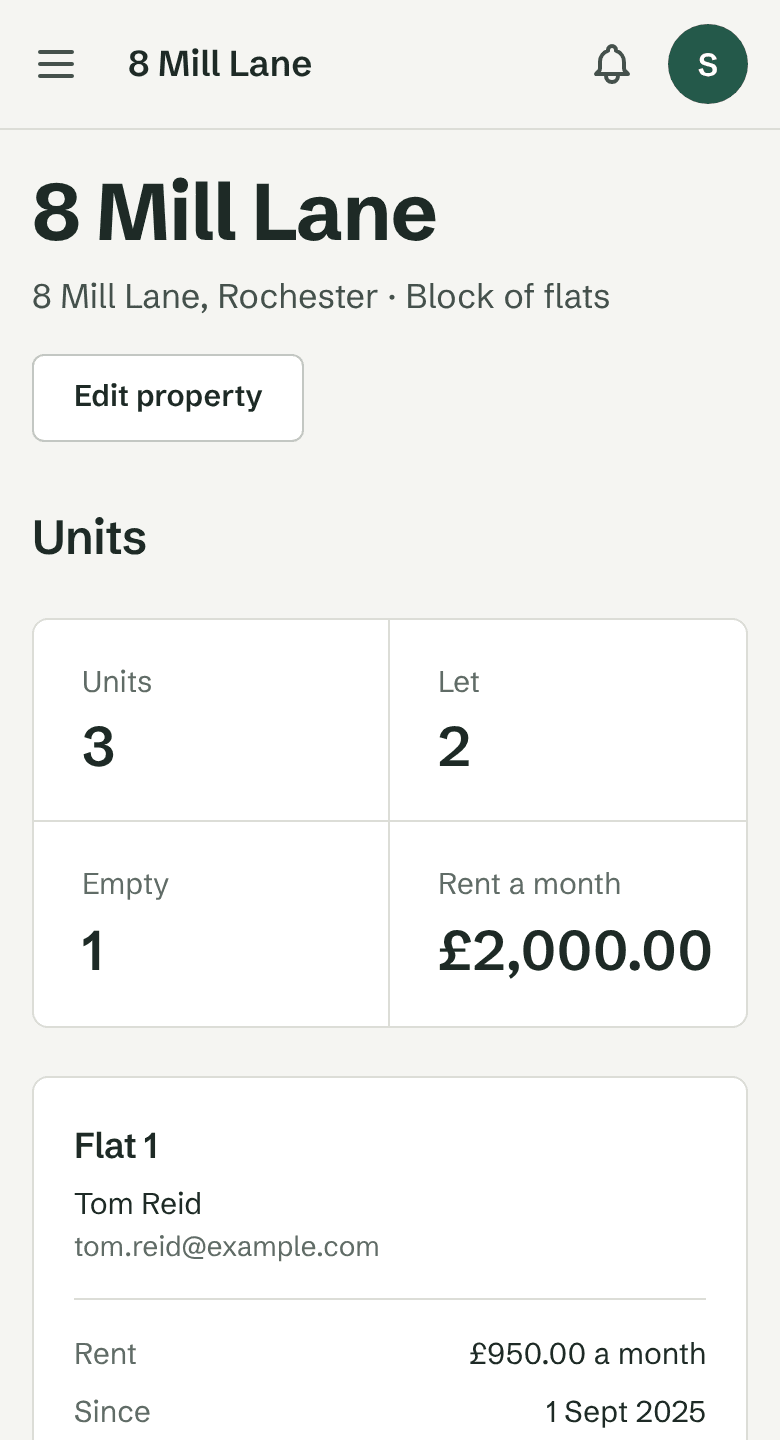
Store each section 13 notice against its tenancy in LieuTenant, then update the rent when it takes effect. Your rent records and the tenant’s view change from that date.
Questions
How much notice do I need to give for a rent increase?
At least 2 months, using a section 13 notice (Form 4A).
Can I increase rent more than once a year?
No. Under the Renters’ Rights Act, rent can only go up once a year.
Sources
This guide is general information, not legal advice. Rules change; check the sources or a professional before acting.