The Renters’ Rights Act: a guide for landlords in England
The Renters’ Rights Act 2025 changed the rules for private tenancies in England from 1 May 2026. Here is what it means for a landlord who manages their own homes.
Checked against the sources below on 21 October 2026. England only.
In short
- Every assured tenancy is now periodic: it rolls on with no end date, and existing fixed terms became periodic on 1 May 2026.
- Section 21 “no-fault” evictions have ended. To get a home back you need one of the grounds in the Act and, if the tenant stays, a court order.
- Rent can go up once a year, with a section 13 notice (Form 4A) and at least 2 months’ notice.
- You can’t take rent before the agreement is signed, and no more than one month’s rent between signing and the start date.
- Tenants can ask to keep a pet. You must reply in writing within 28 days and can’t refuse without a good reason.
- If you had a written agreement before 1 May 2026, you had to give your tenants the government’s information sheet by 31 May 2026.
Periodic tenancies
Fixed terms are gone for assured tenancies. Existing assured shorthold tenancies became assured periodic tenancies on 1 May 2026, and every new tenancy is periodic from the start. The agreement can’t have an end date.
Tenants can end a periodic tenancy by giving 2 months’ notice. Every tenancy needs a written agreement. If yours was verbal, you had to give the tenant the key terms in writing by 31 May 2026.
Getting your home back
You can no longer serve a section 21 notice. Instead, you serve a section 8 notice giving one or more of the grounds in the Act, and if the tenant doesn’t leave you apply to court.
- Selling, or you or family moving in
- 4 months’ notice. Not in the first 12 months of a tenancy, and you can’t re-let or market the home for 12 months afterwards.
- Rent arrears (mandatory ground)
- At least 3 months’ rent owed (13 weeks if rent is weekly or fortnightly), both when you serve notice and at the hearing. 4 weeks’ notice.
- Other arrears grounds
- Discretionary, 4 weeks’ notice.
- Antisocial behaviour
- You can start court proceedings straight away.
Deposits and possession
A court will not give you possession on most grounds if the deposit wasn’t properly protected in a government-approved scheme with the right information given to the tenant. This doesn’t apply to the antisocial behaviour grounds, and it can be put right, for example by returning the deposit.
Rent increases
Rent can rise once a year, to the market rate, using a section 13 notice (Form 4A) with at least 2 months’ notice. Rent review clauses in agreements no longer work.
Tenants can challenge an increase at the First-tier Tribunal before it starts. The Tribunal can’t set a rent above the one you proposed, and the new rent starts from its decision, not backdated.
Letting a home
- Advertise an asking rent and don’t invite or accept offers above it. Rental bidding can bring a civil penalty of up to £7,000.
- Don’t take rent before the tenancy agreement is signed. Between signing and the start date you can ask for up to one month’s rent. Breaking this can bring a penalty of up to £5,000.
- Don’t refuse tenants because they receive benefits or have children. You can still check affordability.
Pets
A tenant can ask to keep a pet. You must consider the request and reply in writing within 28 days, and you can only refuse for a good reason. It is always reasonable to refuse if a superior landlord’s lease bans pets.
What comes next
More of the Act is still to start. A landlord database, which you will have to join and register your homes on, is due to start rolling out in late 2026 or 2027, and membership of a new landlord ombudsman is expected in 2028. A Decent Homes Standard for private rented homes is planned for later. The government has not confirmed all the dates.
Councils can fine landlords up to £7,000 for a first or minor breach and up to £40,000 for serious or repeated ones, and tenants can claim back up to 2 years’ rent through a rent repayment order for some offences.
How LieuTenant helps
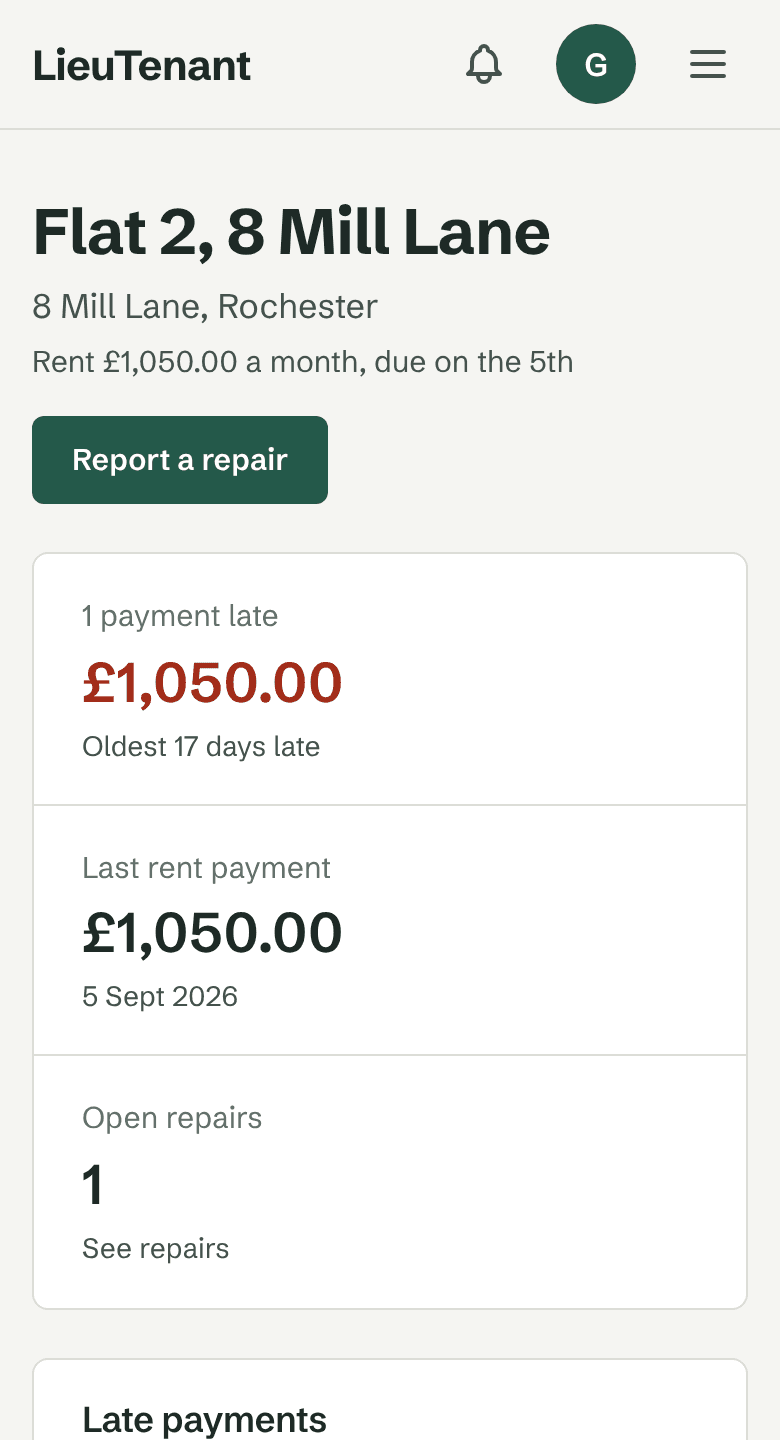
New tenancies are set up as periodic, and LieuTenant won’t create a fixed term starting on or after 1 May 2026. It refuses more than one month’s rent in advance, checks deposits against the Tenant Fees Act limit, keeps section 8 and section 13 notices with the tenancy, and gives tenants a login to ask about pets, with a reminder for you before the 28 days are up.
Questions
Do I need a new tenancy agreement for existing tenants?
No. Existing written agreements carry on as periodic tenancies, but you had to give your tenants the government’s Renters’ Rights Act information sheet by 31 May 2026.
Can I still have a fixed-term tenancy?
Not for an assured tenancy starting on or after 1 May 2026. All assured tenancies are periodic.
How often can I put the rent up?
Once a year, using a section 13 notice (Form 4A) with at least 2 months’ notice.
Does the Act apply in Wales or Scotland?
These changes apply to England. Wales and Scotland have their own tenancy laws.
Sources
- Guide to the Renters’ Rights Act (GOV.UK)
- Renters’ Rights Act: an overview for landlords (GOV.UK)
- Pets in private rented accommodation (Shelter)
- Renters’ Rights Act implementation roadmap (Simmons & Simmons)
This guide is general information, not legal advice. Rules change; check the sources or a professional before acting.