Making Tax Digital for landlords
Making Tax Digital for Income Tax changes how landlords and sole traders keep records and report to HMRC.
Checked against the sources below on 21 October 2026. England only.
In short
- From 6 April 2026 it applies if your qualifying income is over £50,000.
- From 6 April 2027, over £30,000. From 6 April 2028, over £20,000.
- Qualifying income is your total income from property and self-employment before expenses.
- You keep digital records in compatible software and send quarterly updates to HMRC.
- You still file a final return and pay tax by the usual deadlines.
What counts as rental income and expenses
Your taxable profit is rental income less allowable expenses, such as repairs, insurance, agent fees, accountant’s fees and council tax or bills you pay. Improvements and the capital part of mortgage payments aren’t allowable. Relief for mortgage interest on homes you own personally is given at the basic rate only.
Records ready for your accountant
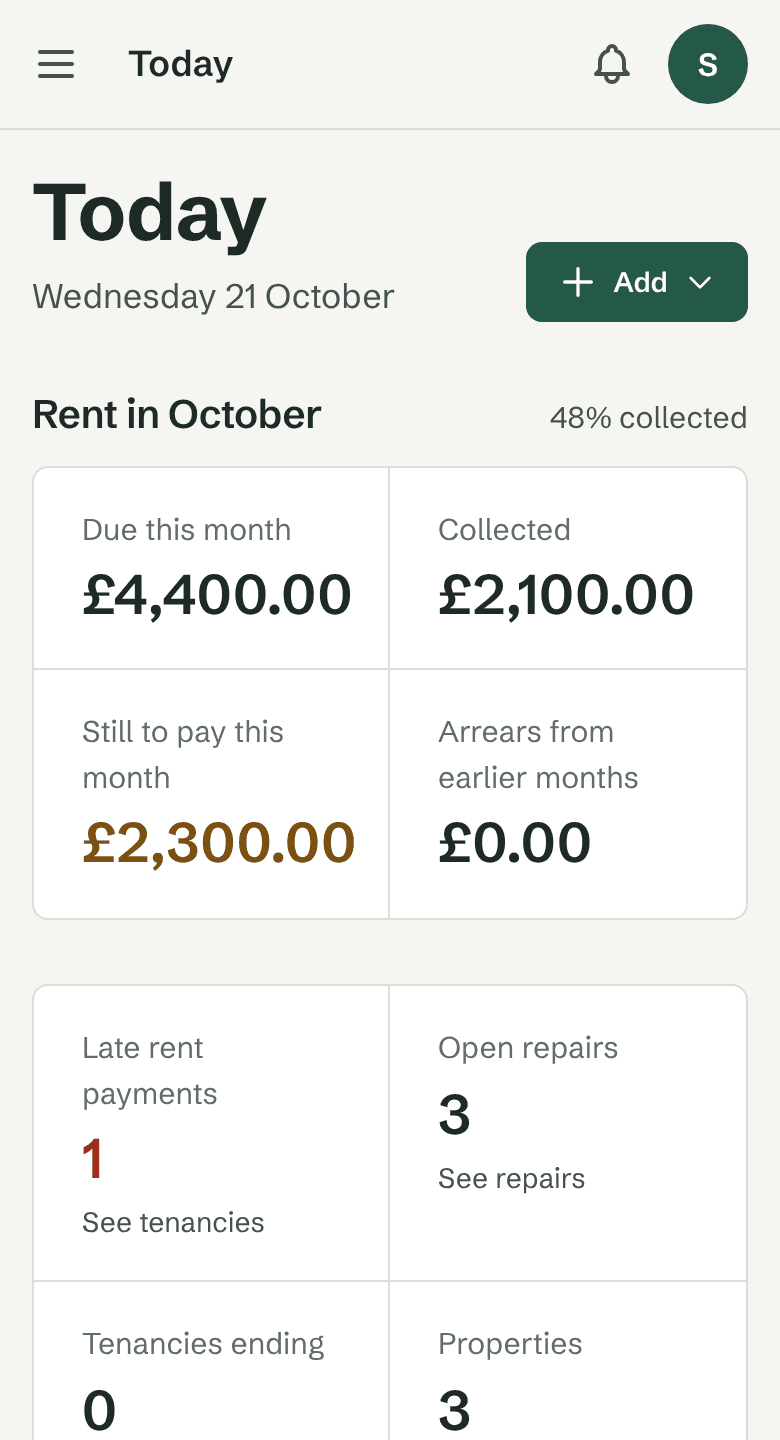
LieuTenant doesn’t submit anything to HMRC. It keeps your rent and expenses together and exports income statements, cash flow, rent collection and property performance as CSV files for your accountant or your Making Tax Digital software.
Questions
Does LieuTenant file Making Tax Digital returns?
No. It exports your income and expense records as CSV files for your accountant or compatible software.
Sources
This guide is general information, not legal advice. Rules change; check the sources or a professional before acting.