Legionella risk assessments for landlords
Landlords have a legal duty to assess and control the risk of legionella, the bacteria behind Legionnaires’ disease, in a rented home’s water system.
Checked against the sources below on 21 October 2026. England only.
In short
- Assess the risk before you let, and review it from time to time, especially if the water system changes.
- Most landlords can do the assessment themselves: no training or accreditation is needed.
- There is no legionella test certificate, and testing is rarely needed in a home.
- Keep hot water hot, cold water cold, and the water moving.
- A written record isn’t usually required, but keeping one shows you did it.
Where the duty comes from
The Health and Safety at Work Act treats a landlord as responsible for the health of their tenants, and the COSHH Regulations cover hazards such as legionella. The Health and Safety Executive’s code of practice, L8, sets out how to meet the duty.
In most homes the risk is low. The assessment doesn’t need to be detailed, but it does need to be done.
What to check
- Hot water stored at 60°C in the cylinder, if there is one. Combi boilers and electric showers store no water, which lowers the risk.
- Cold water tanks with tight-fitting lids and no debris inside.
- Pipework that no longer goes anywhere, which should be removed.
- Taps and showers in an empty home run at least once a week, and the system flushed before a new tenancy.
What to tell tenants
- Don’t turn down the temperature of the hot water cylinder.
- Clean showerheads regularly.
- Report any problem with the hot water or the heating.
How often to review it
The law doesn’t set a fixed interval. Review the assessment periodically and whenever the water system changes. A visit for the gas safety check is a convenient time.
Keep the assessment with the home
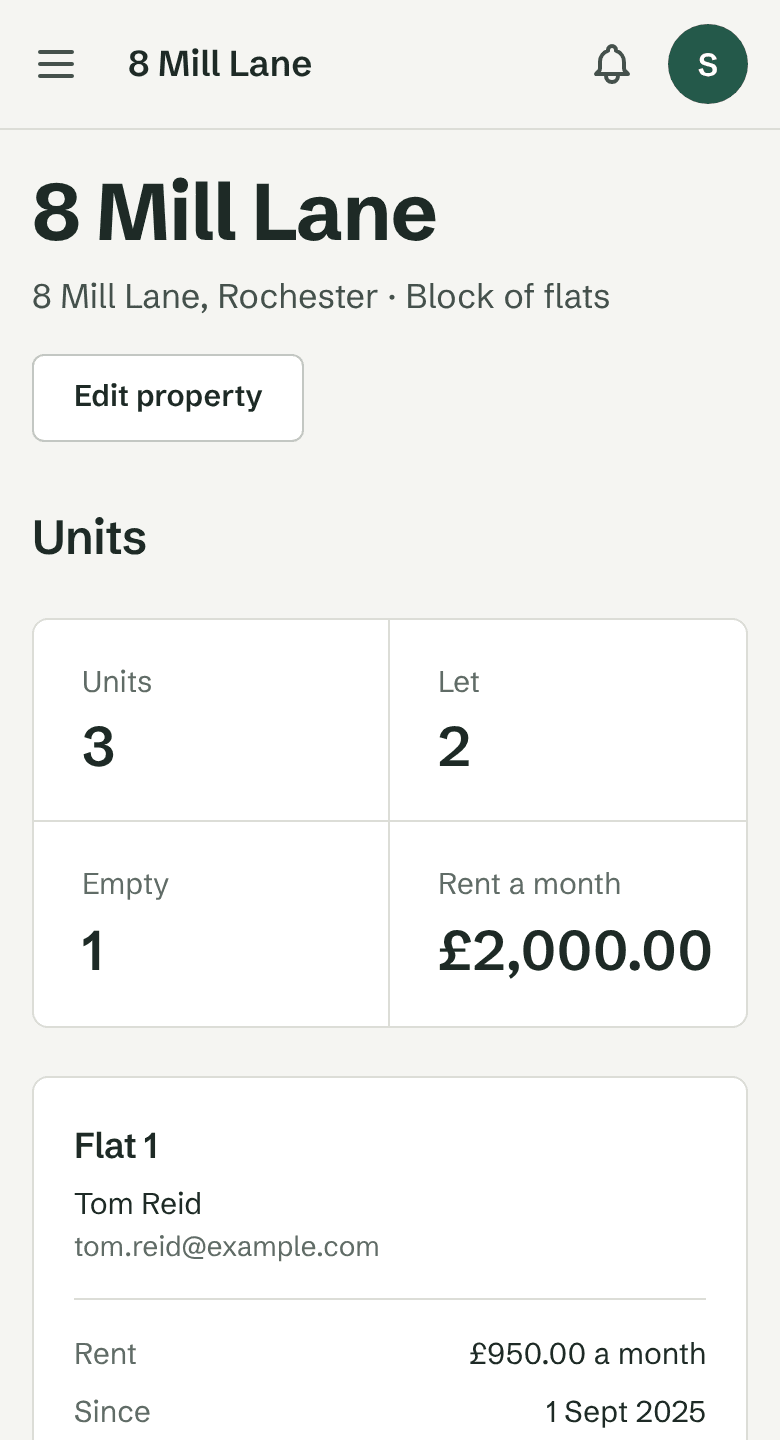
Upload the legionella risk assessment to the property with a review date, and LieuTenant reminds you before it’s due, alongside the gas safety, EICR and EPC.
Questions
Do landlords need a legionella certificate?
No. There is no such certificate. The duty is to assess and control the risk.
Can I do a legionella risk assessment myself?
Yes. The HSE says most landlords can assess the risk themselves without training or accreditation. You can pay someone if you’re not confident.
How often should a legionella risk assessment be done?
There is no fixed interval in law. Review it periodically and whenever the water system changes.
Sources
This guide is general information, not legal advice. Rules change; check the sources or a professional before acting.