EPC rules for landlords
You need a valid Energy Performance Certificate to let a home, and in most cases the home must be rated E or better.
Checked against the sources below on 21 October 2026. England only.
In short
- An EPC is valid for 10 years. Get one before you market the home and give it to prospective tenants.
- Since 1 April 2020 you can’t let, or keep letting, a home rated F or G unless you have registered a valid exemption.
- If improvements to reach E would cost more than £3,500, you may be able to register an exemption.
- Penalties can reach £5,000 per property.
- The government aims to bring as many rented homes as possible to C by 2030, but no C requirement is in force yet.
Exemptions
Exemptions are registered on the PRS Exemptions Register and most last 5 years. They include homes where all relevant improvements have been made, where the cheapest recommended measure would cost more than £3,500 (with three quotes), where consent can’t be obtained, and where wall insulation would harm the building.
Penalties
- Letting a non-compliant home for under 3 months
- Up to £2,000
- Letting it for 3 months or more
- Up to £4,000
- False or misleading exemption information
- Up to £1,000
- Total per property
- Up to £5,000
Know when each EPC runs out
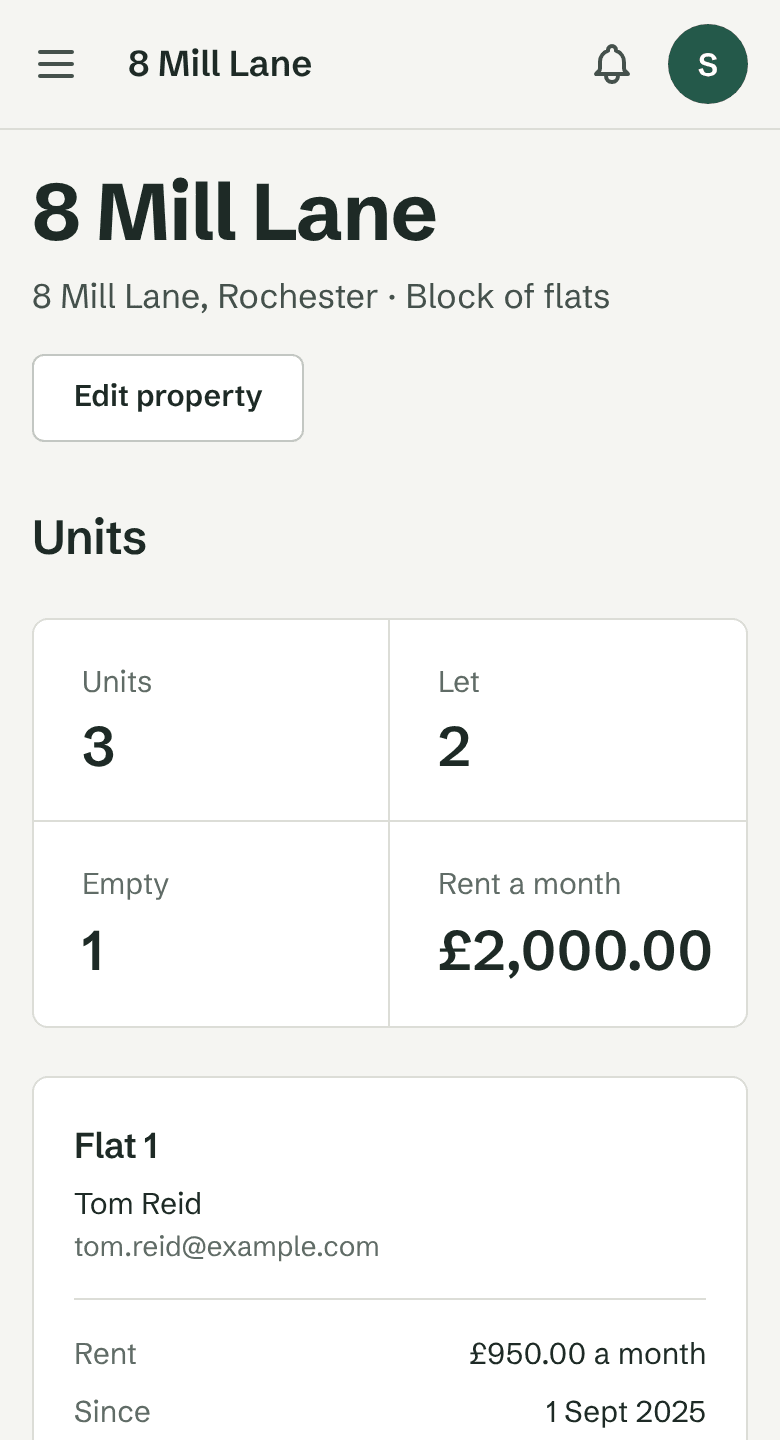
Record each home’s EPC with its expiry date and LieuTenant reminds you before it lapses, next to the gas and electrical certificates for the same home.
Questions
What EPC rating do I need to rent out a property?
E or above, unless you have registered a valid exemption.
Do I need a new EPC for each tenancy?
No. An EPC lasts 10 years, as long as it’s still valid when you let the home.
Sources
- Domestic private rented property: minimum energy efficiency standard (GOV.UK)
- Energy Performance Certificates (GOV.UK)
This guide is general information, not legal advice. Rules change; check the sources or a professional before acting.